
Call us for any question
8500003104Meds Super Speciality Hospital
MallepallyTimings: 7 pm to 10 pm
mohammed4248asif@gmail.com



Blog s
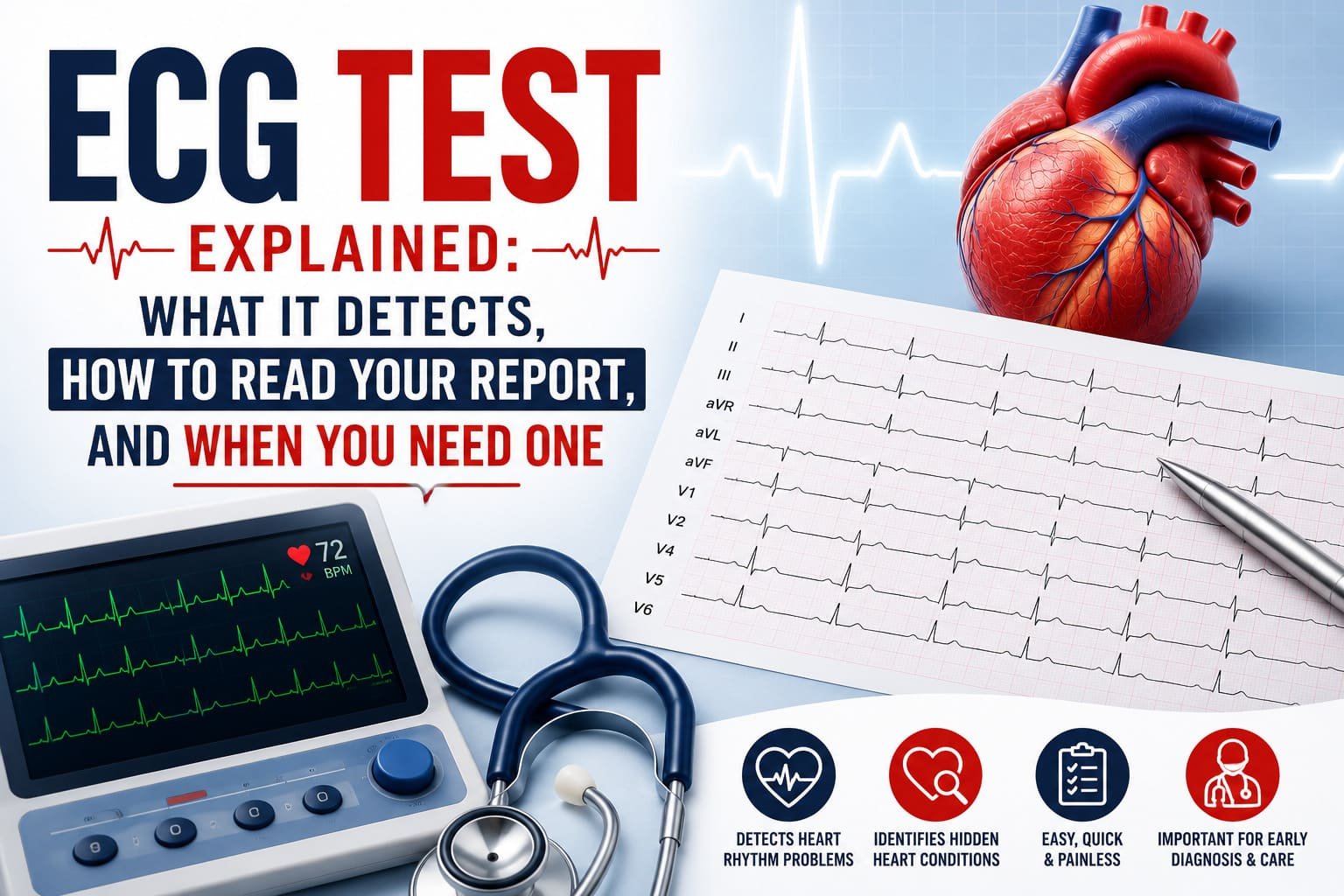
ECG Test Explained What It Detects How to Read Your Report and When You Need One
Updated at: 14 Jul 2026
ECG Test Explained What It Detects How to Read Your Report and When You Need One
Have you ever wondered what those lines and waves on an ECG report actually mean An ECG Test is one of the most common and important tests used to evaluate your heart health It is quick painless and can help detect several heart conditions before they become serious
Many people experience chest pain palpitations dizziness or shortness of breath and are advised to undergo an ECG Test However most patients do not know what the test looks for or how to understand the results Learning about an ECG can help you recognize when to seek medical care and why early diagnosis is so important
What Is an ECG Test
An ECG Test also known as an Electrocardiogram records the electrical activity of your heart Every heartbeat begins with an electrical signal that travels through the heart muscle allowing it to pump blood throughout the body
During the test small adhesive electrodes are placed on your chest arms and legs These electrodes record your heart activity and produce a graph that your cardiologist uses to evaluate your heart rhythm and detect abnormalities
The test usually takes less than five minutes It does not require fasting injections or recovery time making it one of the safest and easiest heart tests available
What Does an ECG Test Detect
An ECG Test helps doctors identify a wide range of heart conditions including
Heart attack
Previous silent heart attack
Irregular heartbeat
Fast heart rate
Slow heart rate
Poor blood supply to the heart
Heart enlargement
Electrical conduction disorders
Electrolyte imbalance affecting heart rhythm
Although an ECG provides valuable information it cannot directly show blocked arteries or measure the pumping strength of the heart Additional tests such as Two Dimensional Echo Stress Test or Coronary Angiogram may be recommended depending on your symptoms
How Is an ECG Test Performed
An ECG Test is simple comfortable and completely painless
You will lie on an examination table while small electrodes are attached to your chest wrists and ankles
The ECG machine records your heart activity while you remain relaxed and breathe normally
Once the recording is complete the electrodes are removed and you can immediately continue your daily routine
How to Read Your ECG Report
Your ECG report contains several important measurements that help your cardiologist understand your heart health
Heart Rate
A normal resting heart rate is usually between sixty and one hundred beats per minute
Heart Rhythm
Normal Sinus Rhythm indicates that your heart is beating regularly and following a healthy electrical pathway
P Wave QRS Complex and T Wave
These waves represent different stages of your heartbeat and help identify rhythm abnormalities
ST Segment
Changes in the ST Segment may indicate reduced blood flow or an ongoing heart attack and should always be evaluated by a cardiologist
Remember that an ECG machine provides only an automated interpretation The final diagnosis should always come from an experienced heart specialist
Can You Have a Normal ECG and Still Have Heart Disease
Yes
A normal ECG does not always rule out heart disease Some people with blocked arteries or early heart disease may have a completely normal ECG while resting
If symptoms continue your doctor may recommend additional investigations including
Blood Tests
Troponin Test
Two Dimensional Echo
Treadmill Stress Test
Coronary Angiogram
If chest pain is accompanied by sweating breathlessness nausea or pain spreading to the left arm jaw or back seek emergency medical care immediately
Types of ECG Tests
Resting ECG
This is the standard ECG performed while you are lying comfortably
Stress ECG
Also called the Treadmill Test this records your heart activity while exercising to identify problems that appear only during physical activity
Holter Monitor
This portable ECG device continuously records your heart rhythm for twenty four to forty eight hours making it useful for detecting occasional irregular heartbeats
When Should You Get an ECG Test
You should consider getting an ECG Test if you experience
Chest pain
Palpitations
Rapid heartbeat
Irregular heartbeat
Shortness of breath
Dizziness
Fainting
Pain in the left arm jaw neck or upper back
Even if you have no symptoms regular ECG screening is recommended if you have diabetes high blood pressure high cholesterol smoke have a family history of heart disease or are over thirty years of age with heart disease risk factors
Common Mistakes Patients Make
Many people ignore symptoms because a previous ECG was normal
Some rely only on smartwatch ECG readings instead of consulting a cardiologist
Others throw away previous ECG reports which makes comparison difficult during future evaluations
Never interpret your ECG report without professional medical advice
Benefits of an ECG Test
Quick and painless
Safe and noninvasive
No radiation exposure
Affordable and widely available
Helps detect heart disease early
Supports timely diagnosis and treatment
Frequently Asked Questions
Is an ECG Test painful
No An ECG Test is completely painless and takes only a few minutes
Can an ECG detect a heart attack
Yes It can detect many heart attacks and may also show evidence of previous silent heart attacks
Can an ECG detect blocked arteries
Not directly Additional tests may be required to identify blocked arteries
Do I need to fast before an ECG Test
No Fasting is not required for a routine ECG
How often should I get an ECG Test
People with heart disease risk factors should discuss regular heart screening with their cardiologist
Final Thoughts
An ECG Test is one of the most valuable tools for evaluating heart health It is fast safe affordable and capable of detecting several serious heart conditions before they become life threatening Understanding what an ECG detects and knowing when to get tested can help you take better care of your heart
If you experience chest pain palpitations dizziness or shortness of breath do not ignore your symptoms Consult an experienced cardiologist and undergo an ECG Test for early diagnosis and timely treatment
Comments

Be the first to Comment
Latest Post
-
⇨What Is Angioplasty? Types, Procedure, Risks & Recovery
-
⇨How to Differentiate Heartburn from a Heart Attack
-
⇨ECG Test Explained What It Detects How to Read Your Report and When You Need One
-
⇨What Are Heart Palpitations Causes Symptoms and When to Worry
-
⇨Pacemaker Implantation: Everything You Need to Know About This Life-Saving Heart Procedure
-
⇨10 Essential Lifestyle Changes for a Healthy Heart
-
⇨Age-Wise Heart Health Guide: Protecting Your Heart in Your 30s, 40s, and 50s
-
⇨Who Is Eligible for a TAVR Procedure? Signs, Symptoms & Benefits Explained
-
⇨5 Reasons to Watch Your Weight for a Healthier Heart
-
⇨How Smoking Affects Your Heart and Blood Vessels
-
⇨Why Heart Attacks Are Becoming Common in Desk Job Employees
-
⇨Diabetes and Heart Health: Risks, Symptoms & Prevention Tips
-
⇨Work Stress & Heart Disease: Warning Signs, Risks, and Prevention Tips
-
⇨When Should You Consult a Cardiac Surgeon in Hyderabad?
-
⇨Heat and Heart Health: What You Need to Know This Summer
-
⇨Angioplasty Treatment in Hyderabad – Complete Guide
-
⇨Best Interventional Cardiologist in Hyderabad for Acute Heart Failure Treatment
-
⇨Foods to Be Avoided by Heart Patients
-
⇨Cholesterol Levels: Safe HDL & LDL Ranges for Heart Health
-
⇨The Ultimate Guide to Finding the Best Cardiologist in Hyderabad

Leave a reply