
Call us for any question
8500003104Meds Super Speciality Hospital
MallepallyTimings: 7 pm to 10 pm
mohammed4248asif@gmail.com



Blog s
Angioplasty Treatment in Hyderabad – Complete Guide
Updated at: 17 Mar 2026
Angioplasty, also known as coronary angioplasty, is a minimally invasive procedure used to open narrowed or blocked coronary arteries. These arteries supply oxygen-rich blood to the heart muscle. When plaque builds up inside the arteries, it restricts blood flow and increases the risk of heart attacks.
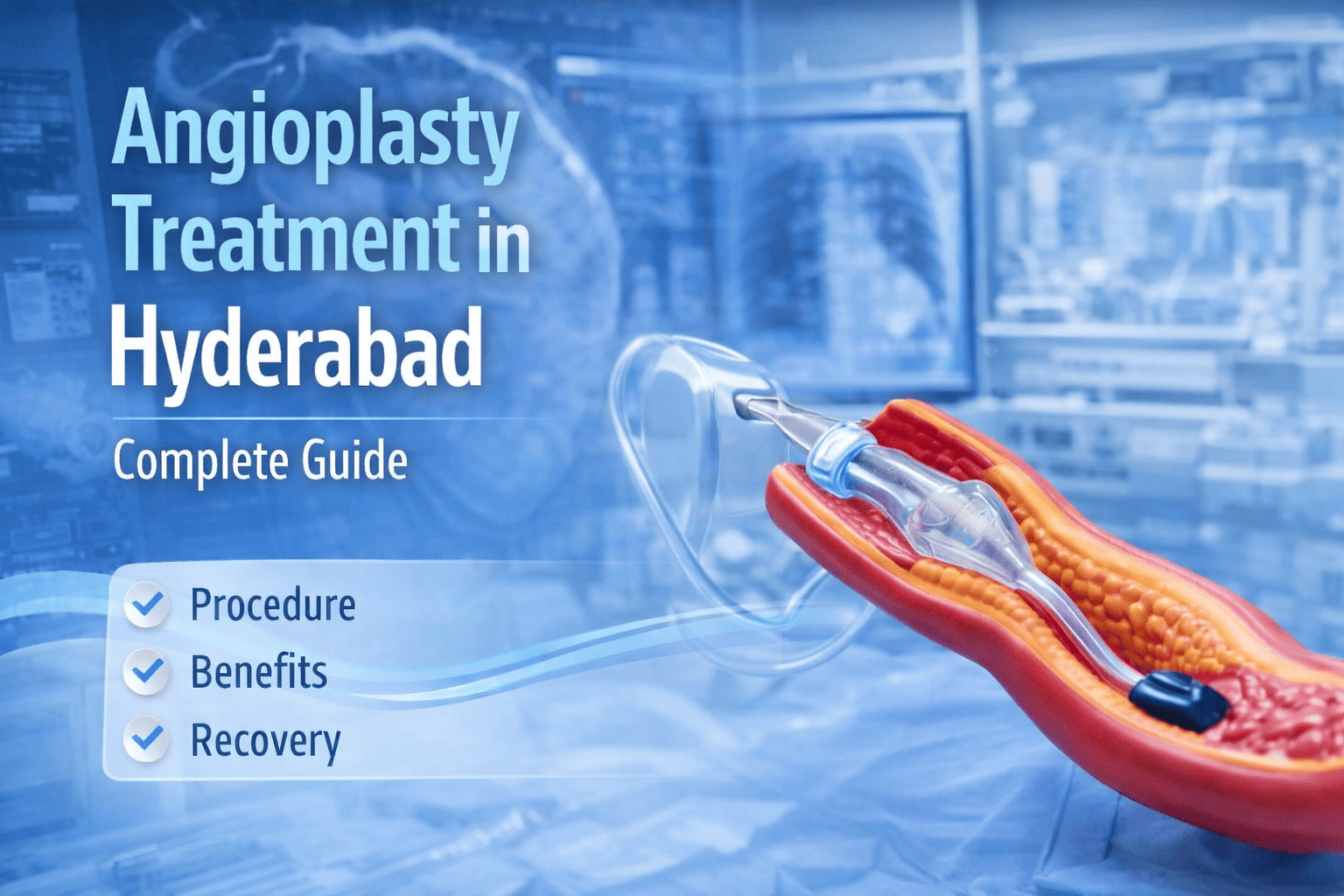
During the procedure, a thin catheter with a small balloon is inserted into a blood vessel and guided to the blocked artery. The balloon is inflated to widen the artery and restore proper blood circulation. In many cases, a small mesh tube called a stent is placed to keep the artery open.
This advanced procedure is commonly performed by a heart specialist in Hyderabad who specializes in interventional cardiology.
Why Is Angioplasty Needed?
Angioplasty is recommended for patients with narrowed or blocked arteries that reduce blood flow to the heart. These blockages can cause chest pain or increase the risk of a heart attack.
Common reasons for angioplasty treatment in Hyderabad include:
-
Coronary artery disease
-
Severe chest pain (angina)
-
Blocked or narrowed coronary arteries
-
Emergency treatment during a heart attack
-
Reduced blood flow to the heart muscle
A top cardiologist in Hyderabad may recommend angioplasty after diagnostic tests such as a coronary angiogram confirm artery blockage.
Symptoms That May Indicate a Blocked Artery
Recognizing early symptoms of heart disease can help prevent serious complications. Some warning signs that may require evaluation by a heart specialist in Hyderabad include:
-
Chest pain or pressure
-
Shortness of breath
-
Fatigue during physical activity
-
Pain in the arms, neck, jaw, or back
-
Irregular heartbeat
If you experience any of these symptoms, it is important to seek medical attention promptly.

How Angioplasty Is Performed
Angioplasty is a minimally invasive procedure usually performed in a specialized cardiac catheterization laboratory.
Step 1: Preparation
Patients receive medication to help them relax. A small incision is made in the wrist or groin area to insert the catheter.
Step 2: Catheter Insertion
A thin catheter is inserted into the artery and guided toward the heart using imaging technology.
Step 3: Balloon Inflation
Once the catheter reaches the blocked artery, a small balloon is inflated to open the artery and restore blood flow.
Step 4: Stent Placement
In many cases, a stent is placed inside the artery to prevent it from narrowing again.
Step 5: Completion
The balloon and catheter are removed, and the insertion site is bandaged.
This procedure is commonly performed by the best cardiologist in Hyderabad using modern interventional cardiology techniques.
Benefits of Angioplasty
Angioplasty offers several advantages compared to traditional open-heart surgery.
Key benefits include:
-
Minimally invasive procedure
-
Faster recovery time
-
Immediate improvement in blood flow
-
Relief from chest pain
-
Reduced risk of heart attack
Patients undergoing angioplasty treatment in Hyderabad often experience significant improvement in their symptoms and overall quality of life.

Recovery After Angioplasty
Recovery after angioplasty is generally faster compared to surgical procedures. Most patients stay in the hospital for observation and can return home within a short period.
During recovery, patients may be advised to:
-
Avoid heavy physical activity for a few days
-
Follow a heart-healthy diet
-
Take medications as prescribed
-
Attend regular follow-up appointments
Regular monitoring by a top cardiologist in Hyderabad helps ensure proper healing and long-term heart health.
Risks and Complications
Although angioplasty is considered safe, there are some potential risks, including:
-
Bleeding at the catheter insertion site
-
Blood clots forming in the stent
-
Narrowing of the artery again (restenosis)
-
Allergic reaction to contrast dye
However, these risks are relatively uncommon when the procedure is performed by an experienced heart specialist in Hyderabad.
Preventing Future Heart Problems
After angioplasty, maintaining a healthy lifestyle is essential for preventing further artery blockages.
Important preventive measures include:
Eat a Heart-Healthy Diet
Consume foods rich in fruits, vegetables, whole grains, and lean proteins.
Exercise Regularly
Physical activity improves blood circulation and strengthens the heart.
Manage Blood Pressure and Cholesterol
Keeping these factors under control helps reduce the risk of heart disease.
Avoid Smoking
Smoking damages blood vessels and significantly increases cardiovascular risk.
Regular checkups with the best cardiologist in Hyderabad can help monitor heart health and prevent complications.
Why Choose an Experienced Cardiologist for Angioplasty?
Angioplasty is a specialized cardiac procedure that requires expertise and precision. Choosing an experienced cardiologist ensures accurate diagnosis, safe treatment, and better patient outcomes.
A top cardiologist in Hyderabad uses advanced diagnostic tools and modern interventional techniques to provide effective care for heart conditions.
Patients benefit from personalized treatment plans and comprehensive cardiac care.
Conclusion
Angioplasty is a life-saving procedure that restores blood flow to the heart and helps treat coronary artery disease. With modern interventional techniques, angioplasty treatment in Hyderabad has become a safe and effective option for patients with blocked arteries.
If you experience symptoms of heart disease, consulting a heart specialist in Hyderabad can help you receive timely diagnosis and treatment. Early medical care, combined with healthy lifestyle choices, plays a key role in maintaining long-term cardiovascular health.
FAQs
What is the success rate of angioplasty?
Angioplasty has a high success rate when performed by an experienced cardiologist in Hyderabad and is widely used to treat blocked coronary arteries.
How long does recovery take after angioplasty?
Most patients recover within a few days, although full recovery may take a few weeks depending on overall health.
Is angioplasty painful?
The procedure is performed under local anesthesia, so patients usually experience minimal discomfort.
How long does the angioplasty procedure take?
The procedure generally takes between 30 minutes and two hours, depending on the complexity of the blockage.
Comments

Be the first to Comment
Latest Post
-
⇨What Is Angioplasty? Types, Procedure, Risks & Recovery
-
⇨How to Differentiate Heartburn from a Heart Attack
-
⇨ECG Test Explained What It Detects How to Read Your Report and When You Need One
-
⇨What Are Heart Palpitations Causes Symptoms and When to Worry
-
⇨Pacemaker Implantation: Everything You Need to Know About This Life-Saving Heart Procedure
-
⇨10 Essential Lifestyle Changes for a Healthy Heart
-
⇨Age-Wise Heart Health Guide: Protecting Your Heart in Your 30s, 40s, and 50s
-
⇨Who Is Eligible for a TAVR Procedure? Signs, Symptoms & Benefits Explained
-
⇨5 Reasons to Watch Your Weight for a Healthier Heart
-
⇨How Smoking Affects Your Heart and Blood Vessels
-
⇨Why Heart Attacks Are Becoming Common in Desk Job Employees
-
⇨Diabetes and Heart Health: Risks, Symptoms & Prevention Tips
-
⇨Work Stress & Heart Disease: Warning Signs, Risks, and Prevention Tips
-
⇨When Should You Consult a Cardiac Surgeon in Hyderabad?
-
⇨Heat and Heart Health: What You Need to Know This Summer
-
⇨Angioplasty Treatment in Hyderabad – Complete Guide
-
⇨Best Interventional Cardiologist in Hyderabad for Acute Heart Failure Treatment
-
⇨Foods to Be Avoided by Heart Patients
-
⇨Cholesterol Levels: Safe HDL & LDL Ranges for Heart Health
-
⇨The Ultimate Guide to Finding the Best Cardiologist in Hyderabad

Leave a reply